
Alexander County Blotter Reality
Here is the plain truth about the blotter. Alexander County posts no multi-day arrest log with a stated date range. For current custody, the official Police-to-Citizen inmate catalog is the sheriff's tool. The Sheriff News archive holds arrest announcements, wanted notices, and public-safety releases. Neither one guarantees coverage of every booking in a given week.
The difference matters more than it looks. A roster tracks people in custody now. Anyone released drops out of view. A news archive reflects what editors chose to publish. A real historical arrest log must cover a defined period. It includes people booked and released long before the search began. When a complete span matters, request records by start date and end date. Add event type and originating office too.
The captured official Sheriff News archive illustrates the county’s selective announcement format.
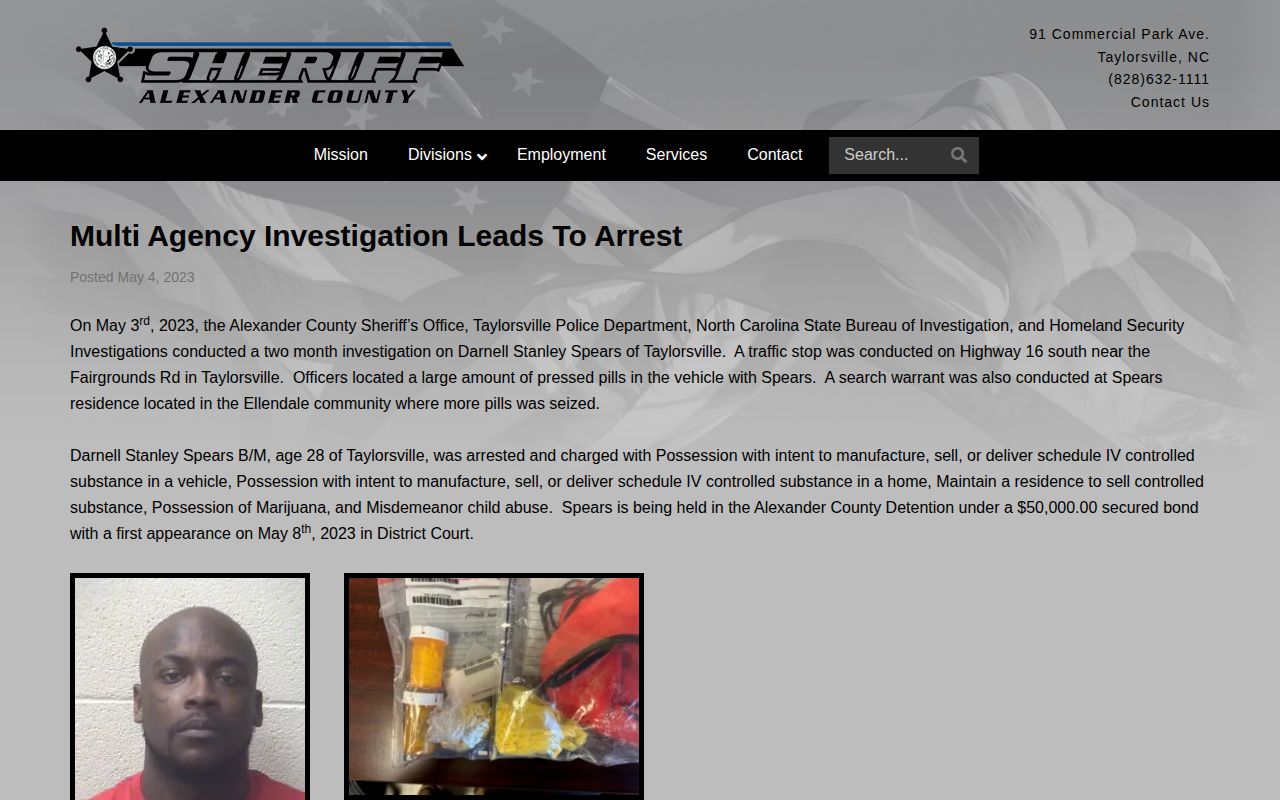
News releases help with context. Their chosen subjects and publication dates cannot be counted into a full arrest tally.
Read Alexander Arrest Records by Date
Give each source one clear job. Move from current custody to agency records, then to the courts, and use news only for background. That discipline keeps old articles, jail status, and later case results from blending into one false timeline.
- Set the exact start and end dates. Include times if an overnight boundary matters.
- Check the official P2C catalog for people who may still be in the Alexander County Detention Center.
- Review the official sheriff news archive for event-based releases during that period.
- Submit the county records form for the date-bounded arrest, booking, or release records that are not online.
- Use Alexander County court resources for hearings and dispositions. Use Arrests Last 24 Hours when the question is limited to a new booking.
The county request form wants a full description, relevant dates, location, preferred format, and contact or payment details. Electronic delivery costs nothing. Paper copies follow the county fee schedule. Expect no special booking-photo price and no fixed turnaround, so promise neither to yourself nor anyone else.
Alexander Police Blotter Fields
The live catalog does not advertise its field layout on a public page. Treat a field as county data only when an official result or a responsive record actually shows it. The table lays out the practical fields for a date-bounded arrest log, along with the limits that follow them.
| Record detail | Meaning and limit |
|---|---|
| Person name | Match the exact official spelling and avoid joining people with similar names. |
| Arrest or booking date | These may differ. State which date controls the selected period. |
| Arresting agency | The sheriff, Taylorsville Police, or another agency may make the arrest. |
| Facility and status | A historical booking at the detention center does not mean the person remains there. |
| Charge text | It is the charge recorded at that stage, not a conviction. |
| Bond or first appearance | These can change after the first report and must be dated. |
| Release or transfer | A separate event that changes custody without deciding the charge. |
| Booking photograph | Availability is not assured. Never substitute a third-party image for an official field. |
Attach a source URL and retrieval time to every online result. If sources conflict, remember the split. The sheriff controls current custody; the court controls the outcome. A news story settles neither.
Weekend Alexander Arrest Reports
No official source promises a special weekend posting schedule. It is tempting to read a Monday press release as proof everything happened Monday. Some readers see three weekend headlines and declare a surge. Both moves mislead. Arrest time, booking time, article time, and records-response time do not move in step. Each can sit on a different day.
Planning a Friday-through-Monday review? Put those dates in the request. Ask whether the list is keyed to arrest or admission. Search the live catalog during the window too. Know that someone released on bond can vanish under a roll-off rule the sheriff does not publish. For current custody questions, call the detention center at 828-632-0304. The sheriff's administrative line is 828-632-1111.
The Alexander County recent-arrests hub maps four systems. It shows how the roster, booking record, court file, and state custody locator fit together. Treating those systems as distinct beats trusting publication day as event day every time.
Alexander’s Historical Arrest Blotter
An old third-party RSS mirror preserves posts the Sheriff once labeled as an arrest blotter. It includes older entries. That is history, not a live feed. The mirror sits outside Alexander County. Its completeness is anyone's guess, and no current official blotter depth exists to match it against.
Use the archive to understand past publishing habits only. Do not treat it as a current sheriff feed. Do not read its last visible post as the moment official records stopped. For anything current, return to P2C, the detention center, and the county request form. An older-period request should say what you want: daily bulletin, booking register, arrest report, incarceration record, or case file. Each class can follow different retention rules.
Alexander Arrest Archives and Retention
The North Carolina State Archives sheriff schedule assigns no single lifetime to all arrest-related records. Case-file photographs, identification photos outside case files, inmate incarceration records, daily bulletins, and criminal case histories each carry their own entry. Some non-case ID photos and incarceration records can close out three years after the event. The schedule and local adoption control that timing. Case-file material follows a separate history.
A record missing from a public screen may simply have rolled off the display. It might still sit at the originating office. Or it may have hit an authorized disposition point. Start with the Sheriff, the detention center, the county records officer, and the Clerk. For transferred historical holdings, turn to the State Archives county box-list search. The Archives hold no current Alexander County booking-photo collection. That county material is historical, not a jail feed. The same official county-records finding-aid page marks the right archival starting point. Turn to it once local offices have been checked.
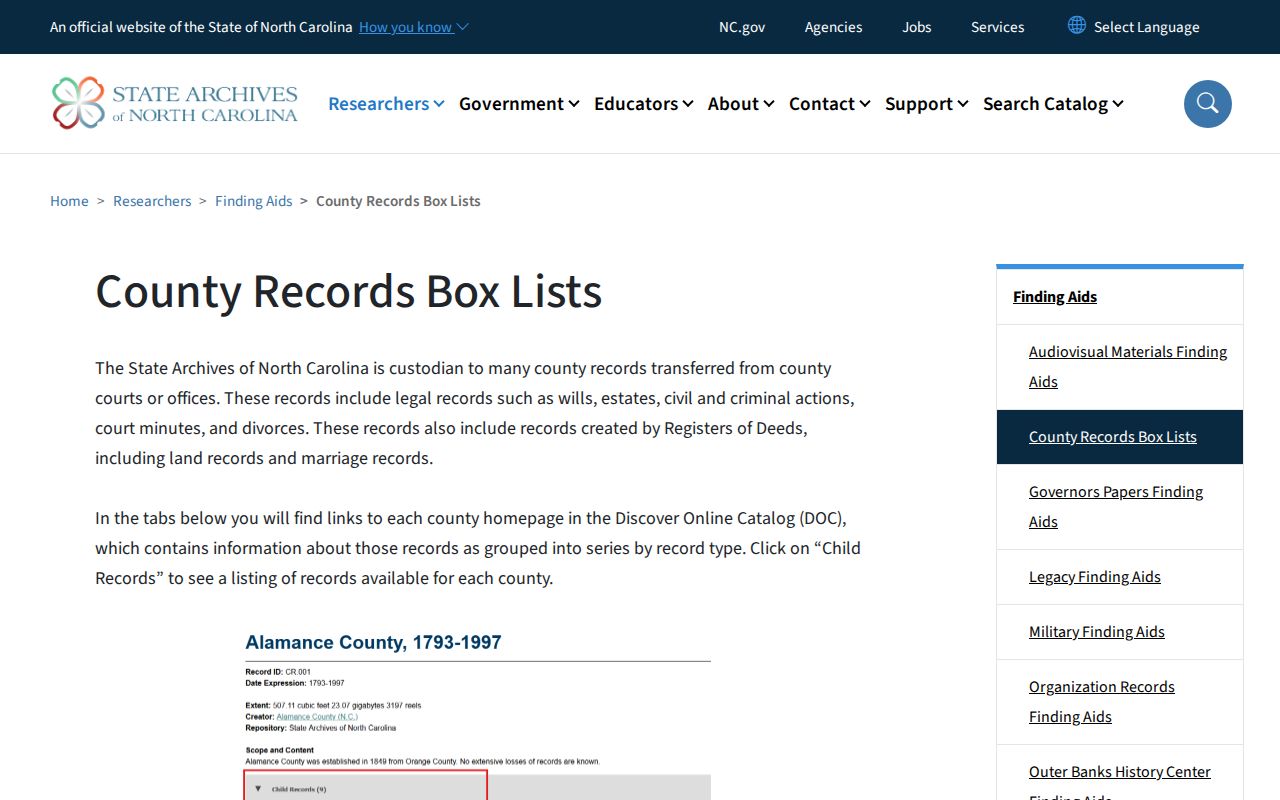
A finding aid lists preserved holdings. It cannot confirm present jail custody or prove that a booking photograph survived.
News Context for Alexander Arrests
Once you have checked official sources, local news adds color to Alexander County arrests. A story can explain why deputies made an arrest. It can also show how an incident fits a wider public-safety picture. The Taylorsville Times reports on the county seat. It also covers towns like Bethlehem, Stony Point, and Hiddenite. For regional crime coverage, the WHKY Crime Report runs stories built with WACB partner material. Major events often land on WBTV's Alexander County page. The outlet groups all of its reporting by county topic there. Remember what news is not. These outlets do not publish a full arrest roster. A photo in a story may be a news image rather than a booking photo. A publication date says nothing about when a person was booked. The WBTV county page is a good sample of how regional outlets organize crime coverage.
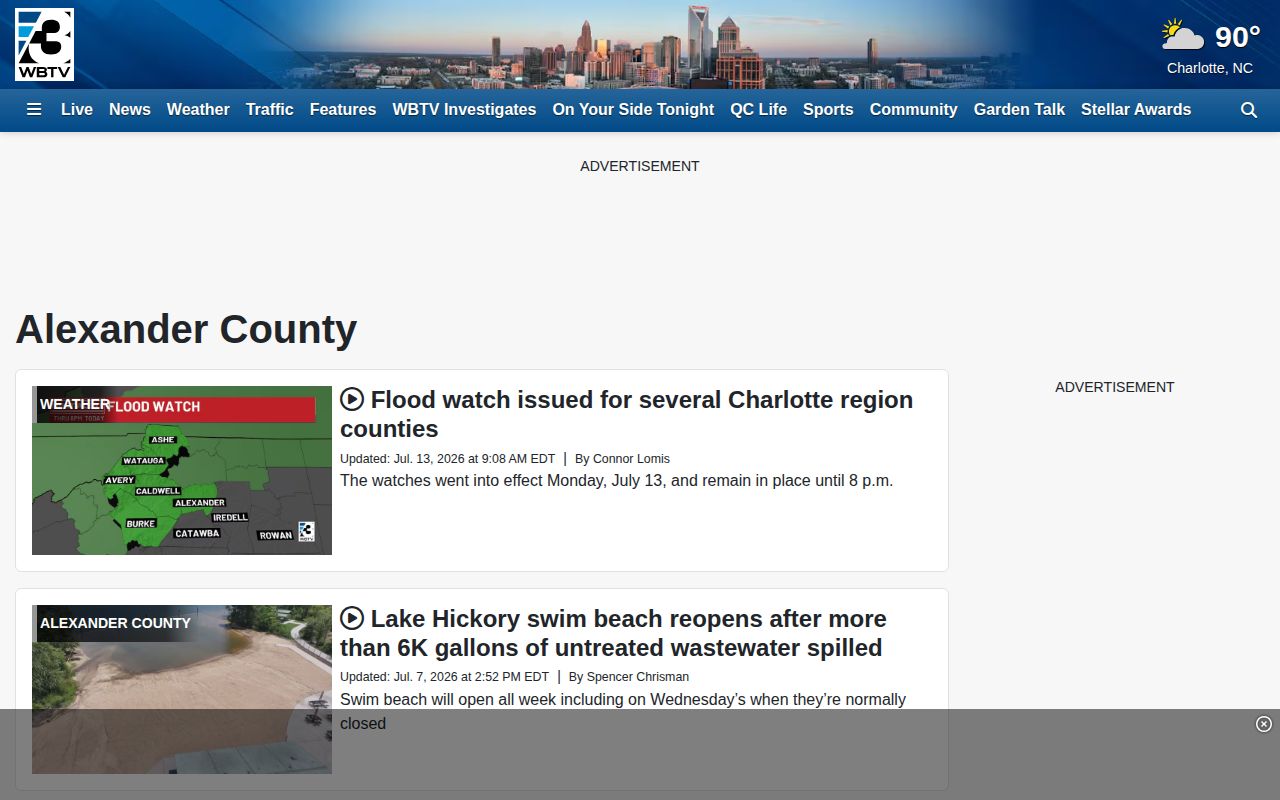
Treat reporting as background. Custody questions go to the Sheriff, and final charge results come from the court. Third-party indexes sit at the bottom of the list. RecentlyBooked claims a thirty-day default and multiple daily updates for its Alexander page. Those claims still do not make it a county feed. Mugshots.com leans mostly historical, and Arrests.org lists no canonical Alexander County page. Such pages can point toward a source record. They run stale, though, and cannot establish current custody.
Blotter Arrests Are Not Convictions
An arrest log records events. It lists charges as filed at booking. Charges can later be amended, dismissed, or resolved, and custody can end while a case is still open. Track a listed charge through the NC eCourts Portal. Court calendars and the Clerk of Superior Court fill in the rest. Keep booking photographs in record context. Do not republish faces as a gallery. When a third-party copy conflicts with an official source, current custody belongs to the sheriff and case outcomes to the court.
Compare sources within the same period. A sheriff article may summarize one event, while a roster reflects custody at the moment checked. A court entry can appear later. These records relate, but they are not interchangeable. A good blotter entry names the office behind each fact. It avoids folding later details into the original booking report.
Corrections follow the same order. An inaccurate agency record goes to the Sheriff or the records custodian. A court record goes to the Clerk. If an unofficial index repeats stale material, use its own free correction policy after the official record is fixed, and never pay a removal demand or assume one change updates every copy.